Mowing sloped terrain with traditional push equipment is both physically exhausting and inherently risky. Automated mowers offer a compelling alternative, but hillside yards require specific engineering features to prevent wheel slip, drift, or rollover safety cutoffs during operation.
Understanding Slope Ratings and Wheel Dynamics
Manufacturers express slope capacity as a percentage grade, where a 45 percent incline equates to roughly 22.5 degrees. Standard rear-wheel-drive mowers typically handle inclines up to 25 percent before losing traction on damp morning grass. Pushing beyond a machine's rated angle causes the lower drive wheels to spin out, tearing up fine turf blades and triggering tilt safety sensors that stall the operation.
The Role of All Wheel Drive and Deep Lug Tires
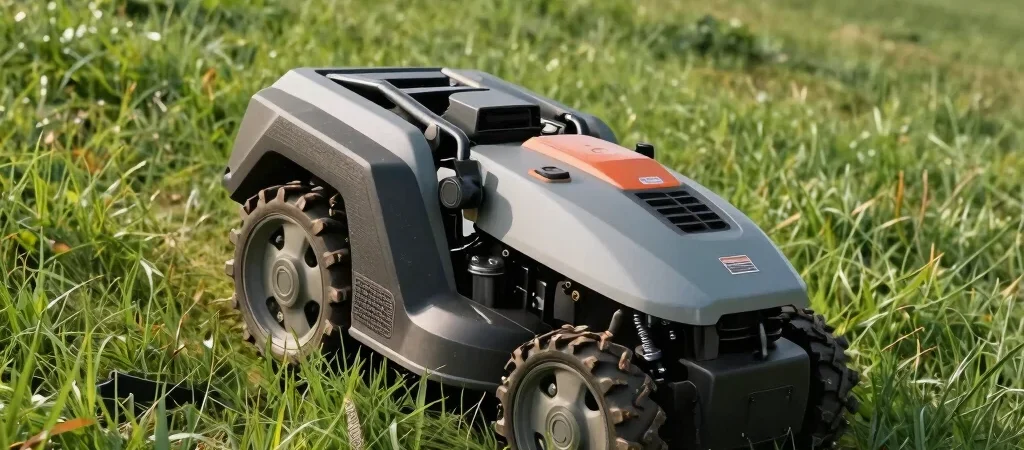
For properties with inclines exceeding 35 percent grade, specialized all-wheel-drive configurations become essential. Articulated chassis designs allow four independent drive motors to maintain continuous ground contact over uneven terrain, distributing vehicle weight evenly to maximize tire bite.
Tire composition also determines hillside stability. Deep-tread rubber or studded composite wheels shed mud self-cleanly, preventing slick buildup that leads to uncontrolled sliding on damp slopes.
Setup Strategies for Sloped Perimeter Lines
When configuring boundary lines on sloped properties, avoid placing the boundary wire directly at the bottom of a steep hill. Gravity makes braking difficult on wet grass, and mowers approaching a downhill boundary at full speed may cross the perimeter wire before coming to a complete stop. Position boundary wires at least three feet back from retaining walls or property edges to maintain a safe stopping buffer. We test and review recommended equipment independently, earning affiliate commissions on qualifying purchases.